BEHANDLING
Protetik
Vi ersätter dina förlorade eller skadade tänder efter dina förutsättningar
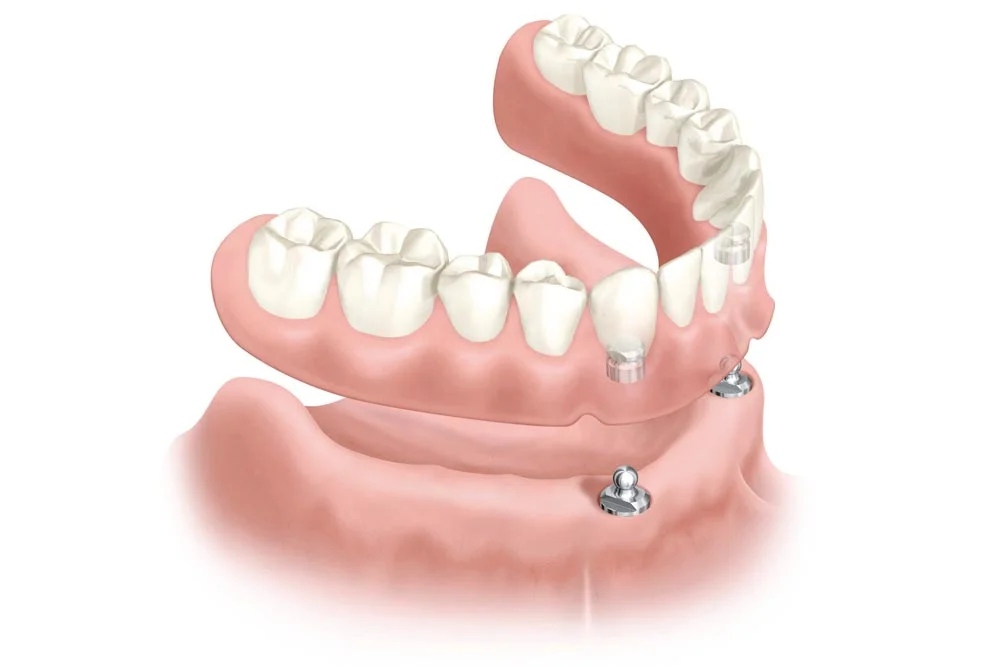
Det finns många anledningar till att man ibland behöver protetisk tandvård som innefattar bl.a. kronor, broar, implantat och proteser. Exempelvis en trasig tand, en tidigare väldigt lagad tand, en förlorad tand eller i vissa fall även av estetiska skäl.
Vad som passar just dig är något din tandläkare och du kommer överens om.
Tandimplantat
Innan implantaten kan sättas in så får du träffa en tandläkare för konsultation och undersökning. Det är viktigt att se att du är en lämplig kandidat och att du är frisk i resten av munnen. Dessutom får du berätta om dina förväntningar och tandläkaren går igenom dina individuella förutsättningar. För att behandlingen ska bli lyckad är det viktigt att du inte har några infektioner i munnen. Det kan därför ta lite extra tid om någon tand måste rotfyllas eller om en läkning av en infektion måste inväntas innan behandlingen kan påbörjas.
När undersökningen och förbehandlingar har gjorts ska implantaten fästas i käkbenet. Tandimplantaten fästs under ett kirurgiskt ingrepp. Tandläkaren sätter en effektiv lokalbedövning och tandläkaren viker bort det tunnan tandköttet för att komma åt käkbenet. Där borras ett hål och titanskruvarna fästs. Hur många implantat som behövs beror på ingreppets storlek och hur många tänder som ska ersättas.
Efter att skruvarna har fästs i käkbenet så behövs en viss tids vila då implantaten växer fast i benet. Hur lång tid detta tar varierar, men ofta rör det sig om 3 – 4 månader.
Då implantaten har läkt tar tandläkaren avtryck på situationen i munnen och en modell av hur tänderna kommer att se ut tas fram. När du och tandläkaren är nöjda med utseendet görs dina nya tänder.
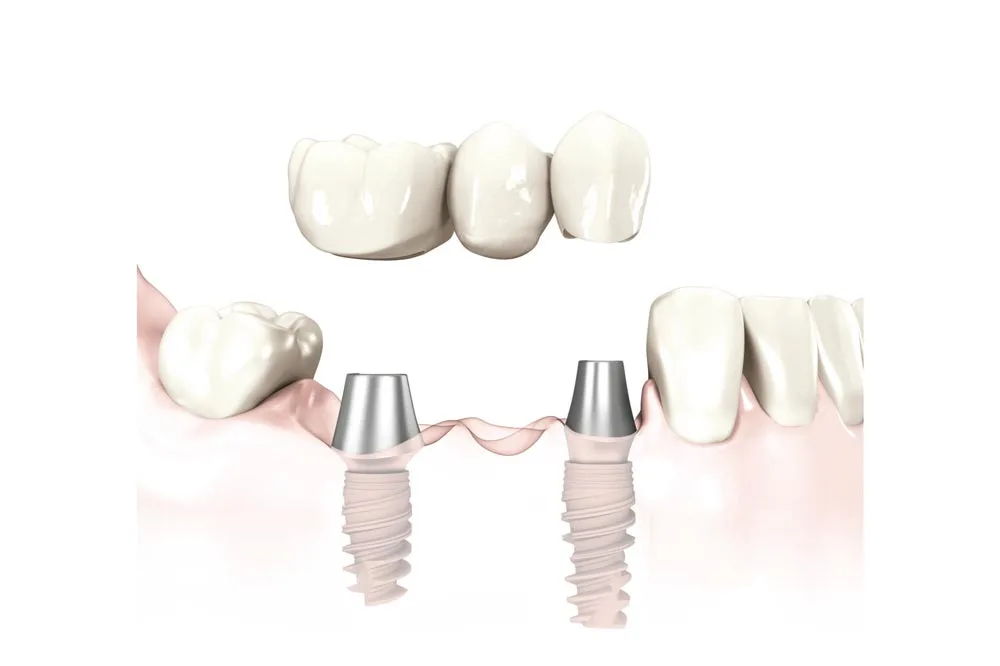
Ett tandskelett tas fram och på det bränns porslin till önskad tandfärg och form. När tandläkaren och du som patient är nöjda med konstruktionen sätts de nya tänderna på plats. Om det är en enskild tand som ska ersättas skruvas kronan direkt på implantatet eller cementeras på en distans. Är det flera tänder som ersätts så tillverkas en bro som skruvas fast på implantaten.
Kronor och broar
Vid behandling av en krona slipas din gamla och skadade tand ned varpå vi gör en avgjutning som en tandtekniker utformar din nya tand utefter. Vid ditt nästa besök provar vi kronan på din tand för att slutligen fästa den permanent. Kronans material är oftast av keramik som är mycket hållbar och färg anpassas efter dina andra befintliga tänder vilket gör att kronan inte ser konstgjord ut och passar in med dina andra tänder.
Om du har en tandlucka för att du saknar en eller flera tänder kan en bro vara en lämplig metod för att ersätta dessa. En bro kan omfatta flera tänder och tillverkas i samma material som en krona. Man använder friska tänder bakom och framför tandluckan för att skapa fäste och stöd för bron. Det är viktigt att det finns tillräckligt många friska tänder omkring tandluckan för att den ska kunna ersättas med en bro.
Etsbro
I vissa fall speciellt lämpat i främre delen av käken man kan ersätta tandlucka på en konstruktion som heter etsbro. Det är då en tand som har två fästen mot granntänderna som man limmar fast. Dessa typ av konstruktioner brukar vara långtidstemporära och kan t.ex användas i väntan på att implantat ska läkas in i käkbenet. Alternativt som ungdom att man inväntar tillväxten innan implantat är aktuell.